80+ Bridal Entry Songs for Indian Weddings in 2026-27
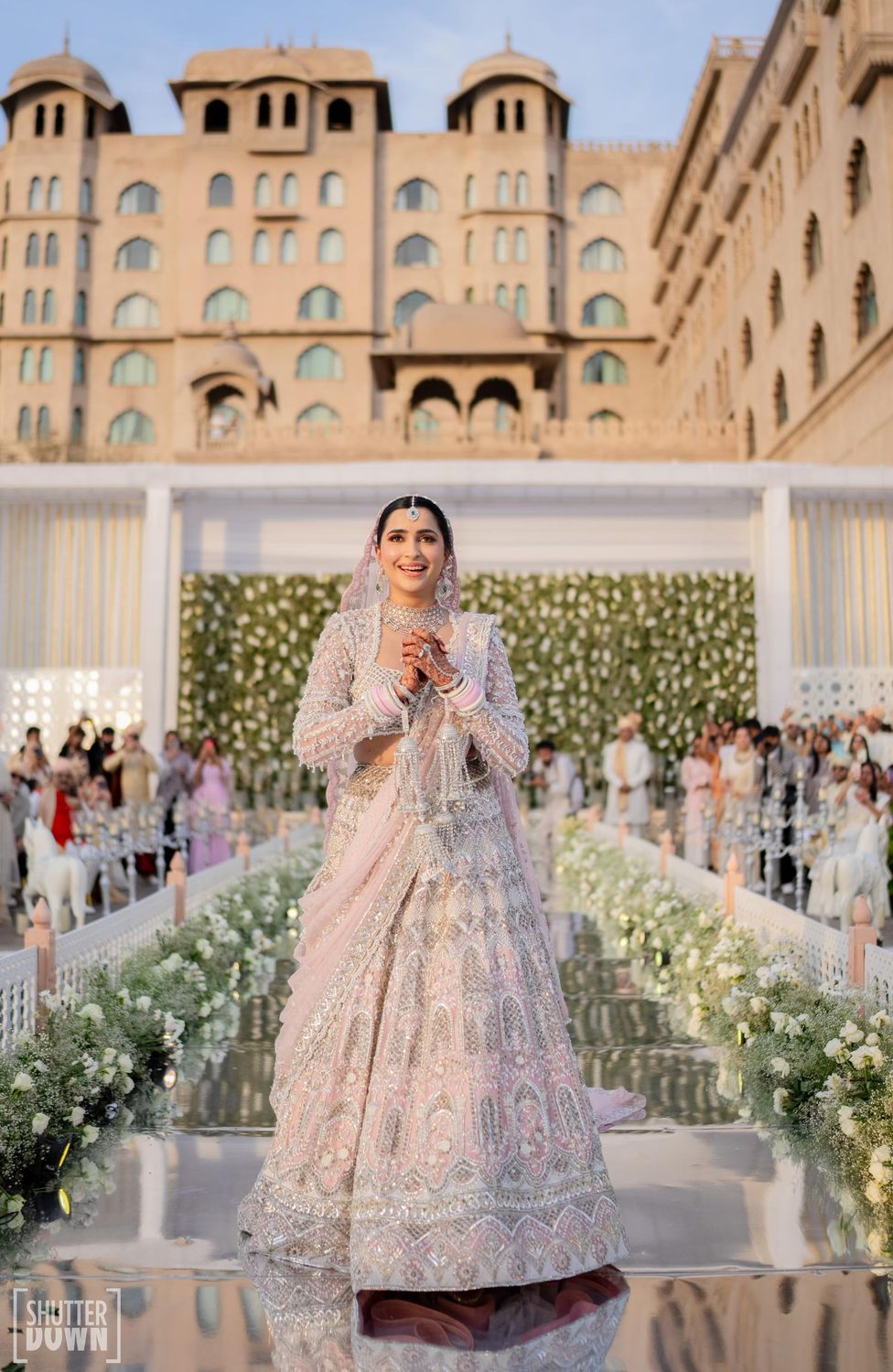
Your bridal entry song does more than soundtrack a walk. It sets the pace of the moment, tells guests when to look up, and decides whether the aisle feels solemn, joyful or cinematic.
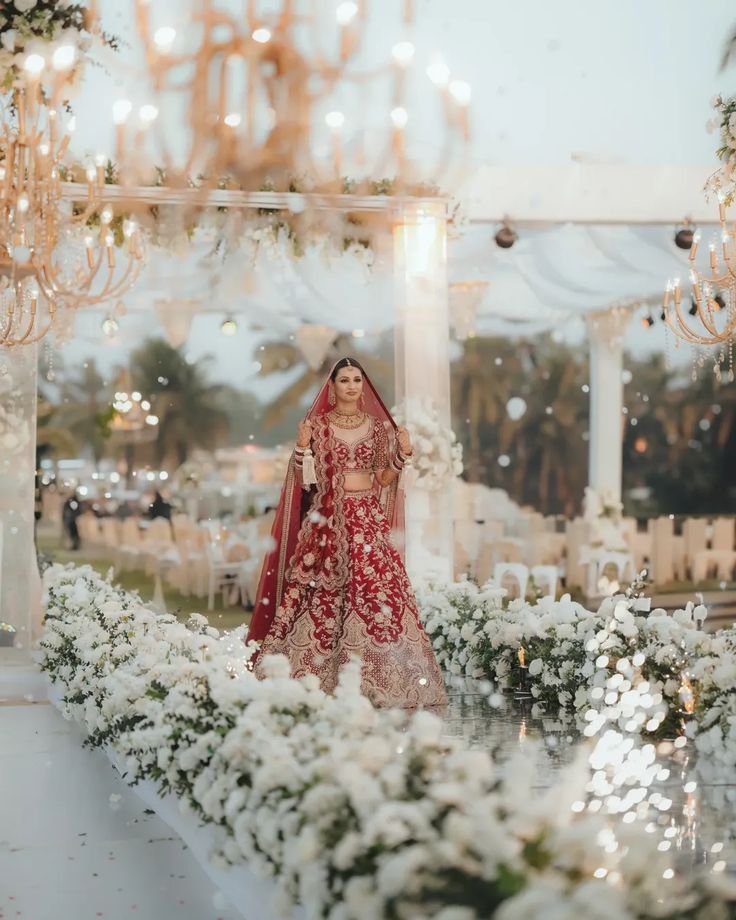
This list is organised by the kind of entry you are actually planning rather than by genre, so you can start from your walk and work backwards to the track. If you are still deciding how to stage the moment itself, our guide to bridal entry ideas covers dolis, reveals, fog, sparklers and family handovers.
How to choose your bridal entry song
Most brides start with a song they love and then discover it does not fit the walk. Do it the other way round.
- Match the song to your pace. Walk the length of your aisle at home while the track plays. If you arrive at the mandap before the first chorus, the song is too long; if it ends before you get halfway, it is too short.
- Decide the emotion first. Acoustic and female-vocal versions read as intimate. Instrumentals and classical pieces read as regal. Dance tracks read as celebration.
- Check the venue. A courtyard, a lawn and a ballroom swallow sound differently. A quiet acoustic track can vanish outdoors.
- Think about the first look. The moment your partner sees you is usually the emotional peak. Choose the part of the song that will be playing right then.
- Keep one backup track. Timing slips at almost every wedding. Have a second option that your DJ can cut to without a jarring transition.
Slow, graceful and understated
These suit a long aisle, an outdoor mandap and a bride who wants the room to go quiet rather than loud. Acoustic and female-vocal versions dominate here for a reason: they leave space for the moment.
- Dori (Acoustic) — soft and intimate, and one of the easiest tracks to imagine playing as the doors open.
- Kuch Kuch Hota Hai (Instrumental) — instantly recognisable without a single lyric, so the entry stays elegant rather than theatrical.
- Jogan (Acoustic) — stripped back and personal, ideal for a small wedding where a big production would feel wrong.
- Jogi (Female Version) — a quiet, unhurried walk with the focus entirely on the bride.
- Vekheya (Reprise) — the softer treatment makes this one lovely for slow-motion footage or a veil reveal.
- Tere Paas Main (Female Version) — emotional and personal rather than grand.
- Becoming Her — the title alone fits a bridal walk, and the song treats the entry as a rite of passage rather than a performance.
- Lae Dooba — gentle and romantic, with a melody that does not demand attention.
- Tu Bin Bataye — an older pick that still feels fresh at weddings.
- Sooraj Ki Baahon Mei — warm and nostalgic, best for a daytime phera.
- Boondon Ke Moti — soft, lyrical and well suited to a monsoon or garden setting.
- Ek Dil Ek Jaan — sweeping and romantic without tipping into melodrama.
- Kithe Reh Gaya — understated and modern, a good fit for a minimal aesthetic.
- Kande Kacheya Ne — a quieter Punjabi option for brides who want roots without a dhol-heavy entry.
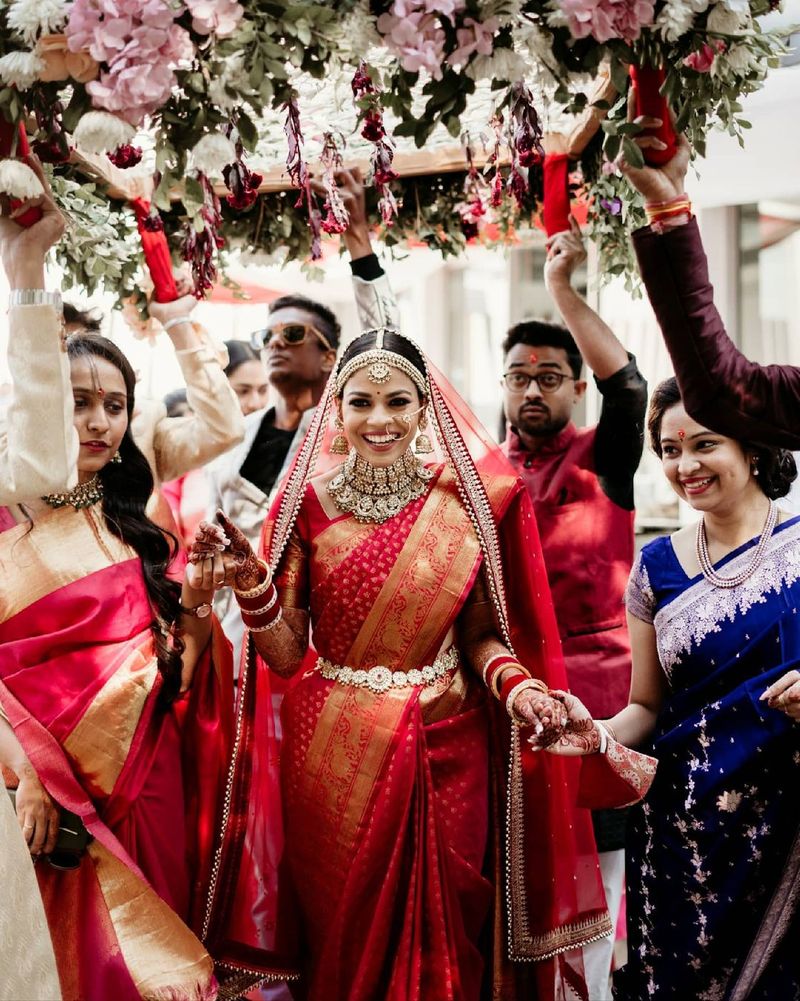
Emotional songs for walking with your parents
If your father, mother or both are walking with you, the song has to carry two emotions at once: joy and the ending of a chapter. These are the tracks that do it without becoming maudlin.
- Dilbaro — written for exactly this walk, and still the most reliable choice for a father-daughter entry.
- Mere Babula — the traditional farewell in song form; expect tears from the older generation.
- I Loved Her First — an English father-daughter classic that works beautifully for a Christian or fusion ceremony.
- Maaye Ni — folk-inspired, warm, and addressed to the mother rather than the father.
- Turr Chaliyan — about leaving home, which makes it painfully apt for a vidai-adjacent entry.
- Jag Ghoomeya (Female Version) — romantic on the surface, but the female vocal shifts its weight towards family.
- Heer — a classic that reads as both love song and lament.
- Raabta (Female Version) — soft and searching, good for a slow walk with both parents.
- Samjhawan (Unplugged) — the unplugged arrangement keeps the focus on the lyrics rather than the production.
- Piya Ghar Aavenge — a devotional-adjacent track that suits a traditional ceremony.
- Aaj Sajeya — celebratory on the surface with an unmistakably emotional undertow.
Sufi, classical and rooted in tradition
For temple-style ceremonies, heritage venues and brides who want the entry to feel sacred rather than staged.
- Arziyaan — a Sufi plea; it turns a walk into something closer to prayer.
- Laayian Laiyan — folk and devotional at once, and rarely used, which keeps it fresh.
- Madhaniya — a Punjabi wedding standard with real emotional weight.
- Chaap Tilak — a centuries-old Sufi text; the length gives you room for a full aisle walk.
- Albela Sajan — classical and majestic, and almost unused by brides, which makes it feel new.
- Thaal — atmospheric and unusual, and it pairs especially well with a traditional bridal look and a dramatic entrance.
- Sita Kalyana — a South Indian choice with a divine, processional quality built for temple-style weddings.
- Mangalyam — a short, auspicious track that suits a South Indian ceremony and a brief walk.
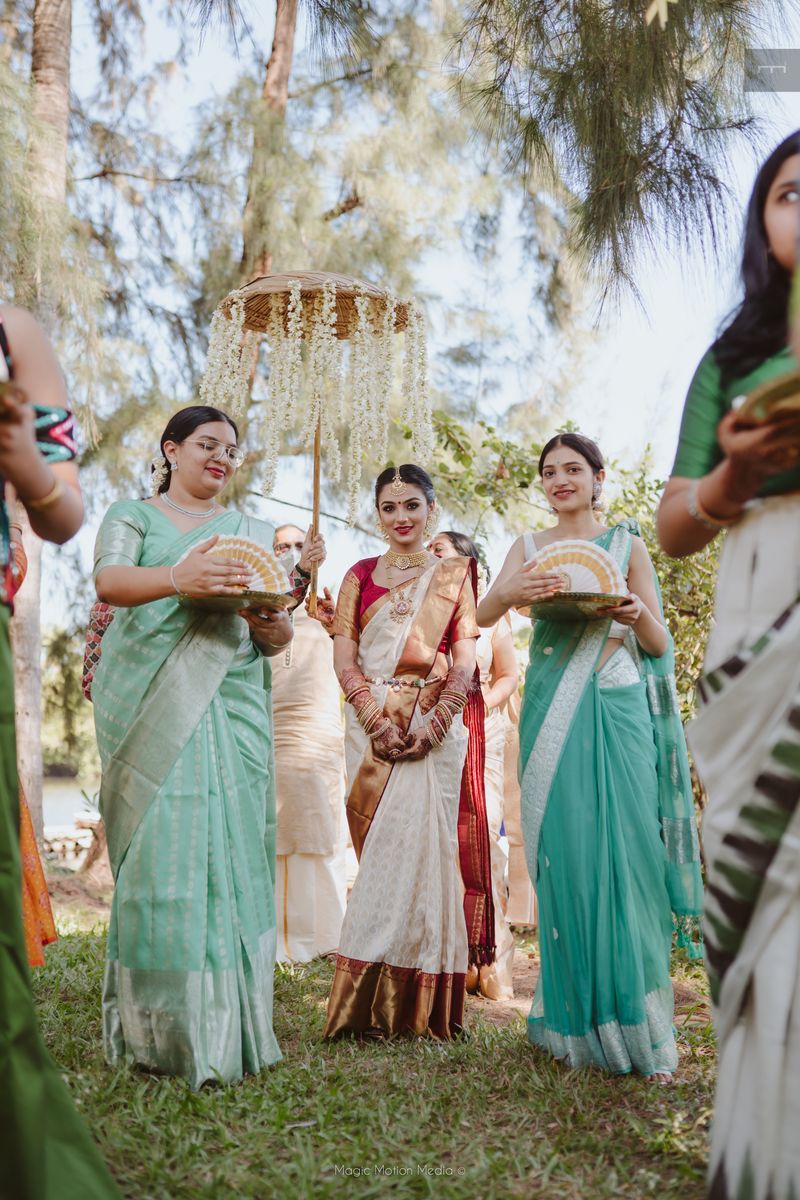
Regal, dramatic and cinematic
Grand palace venues, long staircases and brides who want the entry to feel like a scene rather than a procession.
- Rani's Intro Theme — the diva entry. Dramatic lighting, confident steps, no apology.
- Dastoor — contemporary and intimate; suits a modern, minimal wedding more than a palace.
- Teri Meri Kahani — classic bride-meets-mandap romance with a cinematic sweep.
- Tu Aashiqui Hai — timeless and nostalgic rather than loud.
- Navasachi Gauri Mazhi — for Marathi brides, festive and deeply rooted.
- Din Shagna Da — the modern bridal entry standard, and still the safest grand entrance there is.
- Ranjha — the version that made the rounds after a much-discussed celebrity wedding, and still the most requested cinematic entry.
- Kudmayi — grand and heartfelt; this one carries a full aisle comfortably.
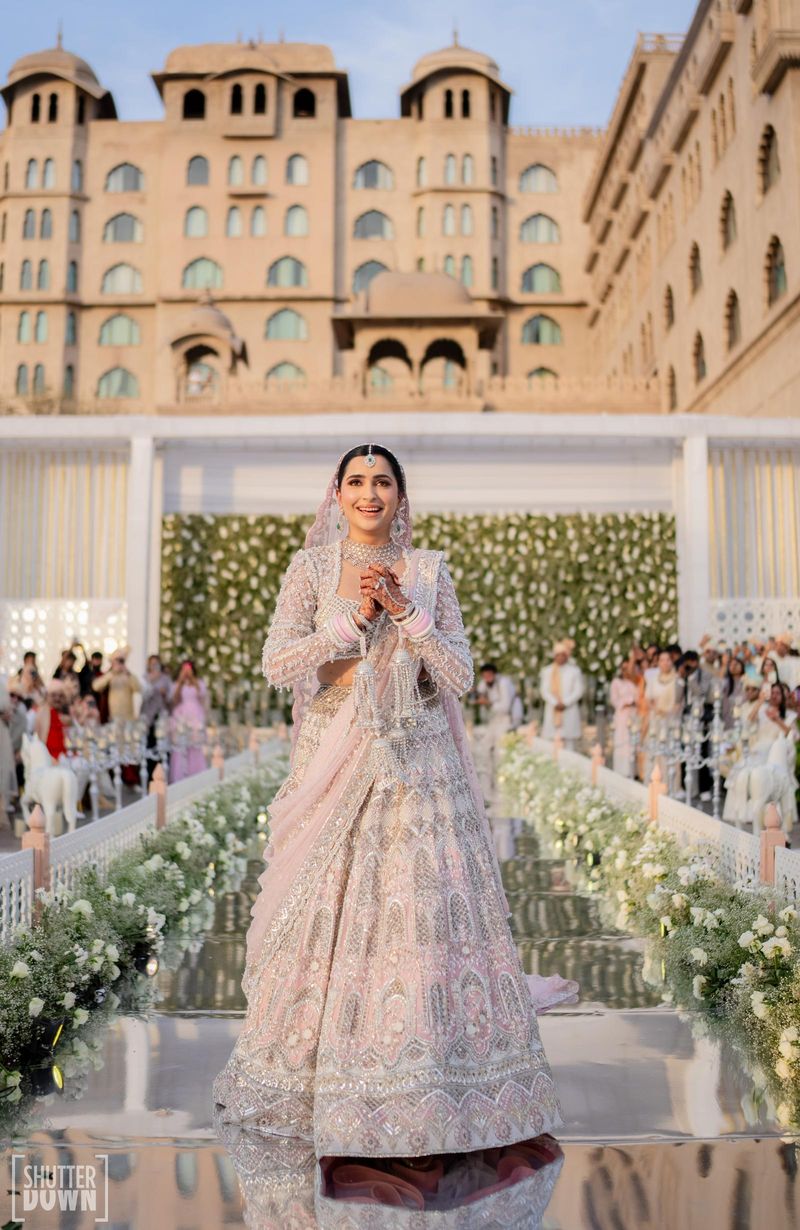
New and trending for the 2026-27 season
These are the tracks appearing on playlists right now, including reprises, covers and versions that did not exist a couple of seasons ago.
- Aisa Milan — delicate and soulful; pairs beautifully with a traditional look and a slow walk.
- Ve Kamleya — romantic and heartfelt, and it builds exactly where the first look happens.
- O Piya (Extended Version) — the extended cut gives you enough time for a long aisle or a phoolon ki chaadar entry.
- Tere Bin (Cover) — soulful and slightly unconventional; lovely at sunset or outdoors.
- Raanjhan Aaya — distinctive beats that caught on fast; a strong pick if you want to sound current.
- Peer Vi Tu — a soul-stirring melody that flatters an emotional walk.
- Madhanya — exuberant and romantic, built for a grand entrance.
- Dekha Tenu Pehli Pehli Baar Ve — dreamy and love-at-first-sight in tone.
- Saanvarey — a recent release that blends traditional and modern moods.
- Jaane Tu — fresh, warm and quietly confident.
- Khushnaseeb — new, heartfelt, and generous with its emotional build.
- Jaane Kaise × Can't Take My Eyes Off You — a mashup that works if you want one foot in each language.
- RangiSaari — playful and colourful; excellent for a daytime entry.
- Saare Jag Mein (Aap Jaisa Koi) — retro-inspired with real personality, and a nice change from the obvious classics.
- Manchala — playful and unforced, for a bride who wants her entry to feel happy rather than choreographed.
- Kudmayi (Female Reprise) — the warmer, slower version of the same song, and a better fit for a gentle walk than the original.
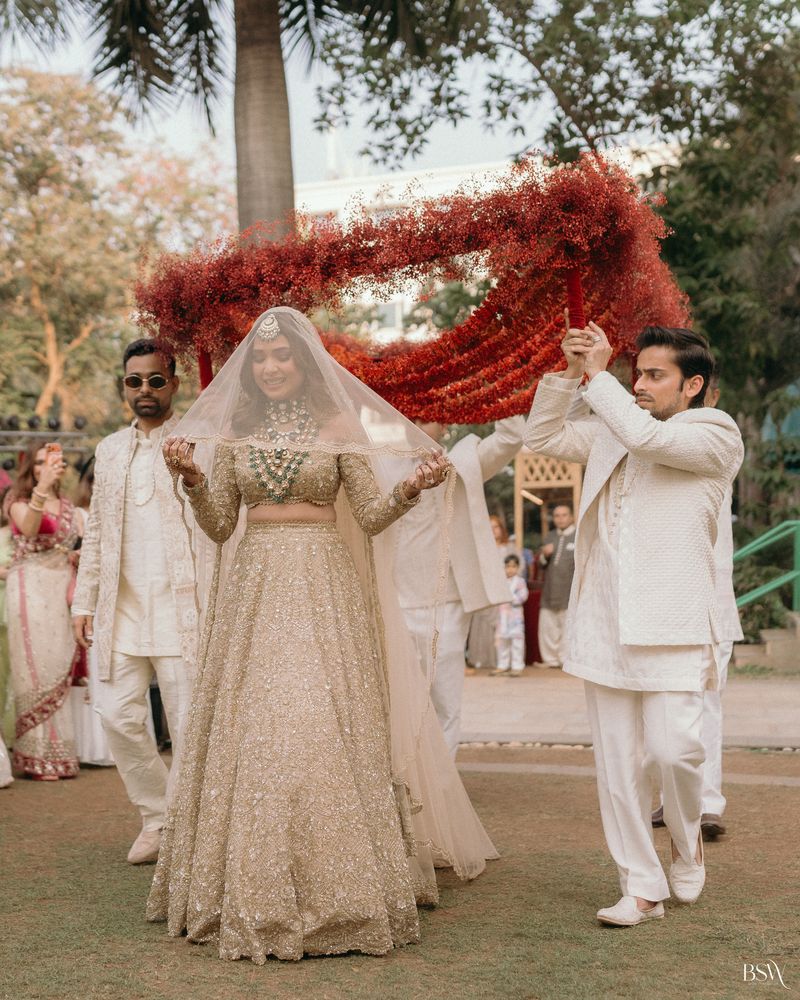
Softly romantic Bollywood picks
A middle ground between the understated list and the grand one: melodic, familiar, and forgiving of an imperfect walking pace.
- Vaaste — light and romantic; suits a young, breezy entry.
- Afreen Afreen (Coke Studio Version) — regal and timeless, and it flatters red-and-gold or heavily embroidered outfits.
- Laadli — tender and melodic, with a devotional warmth.
- Lagan Lagi Re — folk-romantic and unhurried.
- Moh Moh Ke Dhaage (Female) — soft, poetic and easy to walk to.
- Kabira Encore — gentle and reflective, and one of the most reliable choices for a veil-first entry.
Peppy songs for a bridesmaids entry
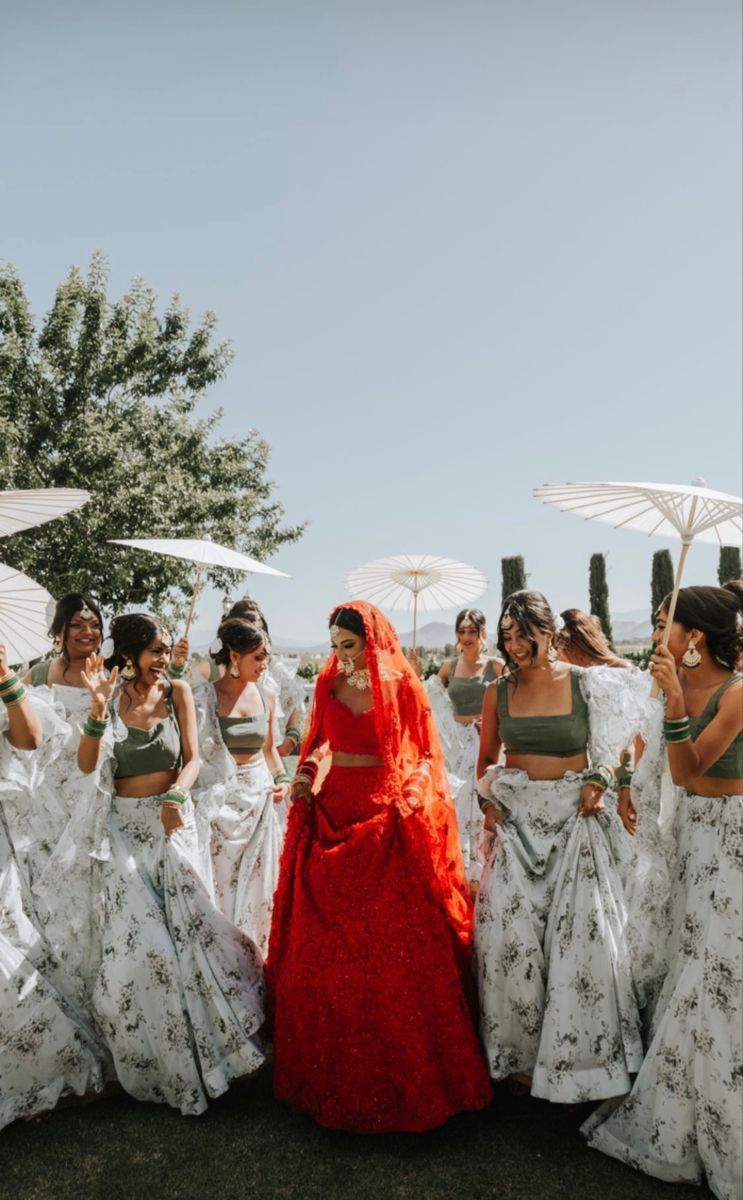
If your friends are walking with you, the song should have a hook they can move to — and enough energy to cover any uneven timing.
- Nachdi Phira — joyful and a little defiant; made for a group walk.
- Sau Aasmaan — bright and celebratory.
- Raataan Lambiyaan — slower than the rest of this list but still romantic enough for a group.
- Sweetheart — sweet and upbeat, and easy to keep in step with.
- Vekhan Nu — a Punjabi pick with genuine bounce.
- Main Tey Jaana Tere Naal — celebratory without a heavy dhol intro.
- Akh Kashni — playful and rhythmic.
- Nai Jaana — the most upbeat option here, best for a short aisle.
English songs for a modern entry
These work for Christian ceremonies, fusion weddings and any bride who simply prefers English lyrics.
- I Get To Love You — the modern wedding standard, and it holds up in a large venue.
- Can't Help Falling in Love (Folk Version) — warm and acoustic; ideal for an outdoor mandap.
- Can't Help Falling in Love (Acoustic Cover) — the softer of the two, better for a small ceremony.
- So Easy (To Fall in Love) — gentle and unhurried.
- Tenerife Sea — quiet and intimate, and it needs a venue where guests will actually stay silent.
- Young & Beautiful — cinematic and a touch melancholy.
- Perfect — the safest English choice for a slow walk.
- A Thousand Years — long enough for a full aisle, with a natural build.
- Simply the Best (Slow Version) — an unexpected pick that lands well when it is played quietly.
Using the song on the day
- Give your DJ exact cue points. Tell them the timestamp where you start walking and the timestamp where you reach the mandap, not just the song name.
- Rehearse with the real track. Walk the actual distance, in your actual footwear, at least once.
- Fade rather than cut. If your walk runs long, a slow fade keeps the moment intact where a hard stop breaks it.
- Brief your photographer and videographer. We position differently for a slow classical walk than for a dance entry, and knowing the track tells us where the emotional peak will land.
- Check licensing if you plan to publish. Commercial film and pop tracks in a wedding film distributed online can attract music-rights claims, so ask your filmmaker about a licensed-music cut. For a broader list across every function, see our Bollywood wedding songs guide.
Frequently asked questions
How long should the bridal entry song be?
Between ninety seconds and three minutes for most aisles. Anything under a minute feels abrupt, and anything over four minutes starts to lose the room unless the walk itself is choreographed.
Should the bridal entry song have lyrics?
Not necessarily. Instrumentals are a strong option when you want the guests' attention on you rather than on a familiar lyric, and they avoid the risk of a line that does not match the moment.
Can we use a different song for the vidai?
Yes, and most couples do. Keep the two in the same emotional register so the ceremony does not feel like two unrelated events. Our earlier bridal entry songs list has more classics if you want to go deeper into the older repertoire.
Still deciding how to stage the walk itself? Talk to us — we have photographed hundreds of Indian wedding entries and can tell you how a track will actually play out on the day.